← All 20 Chess Legends · Opening Codex · Endgame Atlas
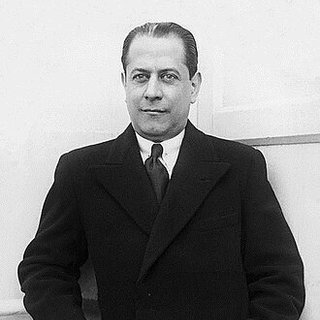
José Raúl Capablanca — 3rd World Champion · The Human Chess Machine (8 Years Unbeaten)
CUB · 8 yrs Unbeaten · 1909–1939 · 3rd World Champion (1921–1927)
Unbeaten in tournament play for eight full years (1916–1924). Capablanca possessed miraculous natural intuition, stripping away clutter and guiding games from the middlegame directly into crystal-clear winning endgames.
Style DNA: Tactical undefined/100 · Positional 98/100 · Sacrifice undefined/100 · Endgame 100/100 · Opening Prep undefined/100 · Defense undefined/100
New York 1924 Rook Endgame · The Immortal King March (1924)
José Raúl Capablanca vs Savielly Tartakower · New York International · ECO A80 · 1-0
FEN: 5k2/p1p4R/1pr5/3p1pP1/P2P1P2/2P2K2/8/8 w - - 0 35
Black threatens ...Rxc3+ winning a pawn. Should Capablanca retreat passively to guard c3, or march his king straight into enemy territory?
Turning-Point Candidate Moves & Coach Otto Evaluation
- [A] 35. Ke2? — 35. Ke2? still drops c3 or entombs White's king on the back ranks while Black's rook dominates—throwing away the win!
- [B] 35. Kg3!! — 35. Kg3!! The king is a fighting piece! Capablanca sacrifices c3 and f4 so his king marches Kg3–Kh4–Kg5–Kf6 to escort the g-pawn!
- [C] 35. Rd7?! — 35. Rd7?! abandons the 7th rank prematurely; after 35...Ke8 36. Rxd5 Rxc3+ Black activates both king and rook for a likely draw.
Kg3 Rxc3+ Kh4 Rf3 g6 Rxf4+ Kg5
View Complete Official PGN
[Event "New York International"]
[Site "New York"]
[Date "1924.??.??"]
[Round "?"]
[White "José Raúl Capablanca"]
[Black "Savielly Tartakower"]
[Result "1-0"]
[ECO "A80"]

1. d4 e6 2. Nf3 f5 3. c4 Nf6 4. Bg5 Be7 5. Nc3 O-O 6. e3 b6 7. Bd3 Bb7 8. O-O Qe8 9. Qe2 Ne4 10. Bxe7 Nxc3 11. bxc3 Qxe7 12. a4 Bxf3 13. Qxf3 Nc6 14. Rfb1 Rae8 15. Qh3 Rf6 16. f4 Na5 17. Qf3 d6 18. Re1 Qd7 19. e4 fxe4 20. Qxe4 g6 21. g3 Kf8 22. Kg2 Rf7 23. h4 d5 24. cxd5 exd5 25. Qxe8+ Qxe8 26. Rxe8+ Kxe8 27. h5 Rf6 28. hxg6 hxg6 29. Rh1 Kf8 30. Rh7 Rc6 31. g4 Nc4 32. g5 Ne3+ 33. Kf3 Nf5 34. Bxf5 gxf5 35. Kg3 Rxc3+ 36. Kh4 Rf3 37. g6 Rxf4+ 38. Kg5 Re4 39. Kf6 Kg8 40. Rg7+ Kh8 41. Rxc7 Re8 42. Kxf5 Re4 43. Kf6 Rf4+ 44. Ke5 Rg4 45. g7+ Kg8 46. Rxa7 Rg1 47. Kxd5 Rc1 48. Kd6 Rc2 49. d5 Rc1 50. Rc7 Ra1 51. Kc6 Rxa4 52. d6 1-0
What Every Club Player Should Steal from Capablanca
- Endgame-first vision: evaluates middlegame trades by imagining the resulting king-and-pawn or rook ending.
- Effortless economy of force: achieves maximum board control with quiet, natural developing moves.
- Active king & 7th-rank rook synergy: willing to sacrifice two pawns just to march his king to f6.
- Study endgames BEFORE memorizing 20-move openings—knowing which rook ending is won tells you when to trade queens.
- In rook endgames, never crouch passively defending weak pawns; keep your rook on the 7th rank and march your king forward.
- Eliminate one-move tactical blunders by simplifying when ahead in structure or passed pawns.
Capablanca favored classical central control in the Queen's Gambit Declined and Ruy Lopez, steering effortlessly into outside-passed-pawn and active rook endgames.
FAQ
How long did Capablanca go undefeated in classical chess?
Capablanca did not lose a single official tournament or match game for eight years, from February 1916 until March 1924—including his undefeated 1921 World Championship triumph over Lasker.
Why did Capablanca recommend studying endgames first?
Because middlegame strategy only makes sense when you know which simplified structures win or draw once pieces are exchanged.
What is the lesson of 35. Kg3!! in Capablanca vs Tartakower (1924)?
In rook endgames, king + rook activity and an advanced passed pawn outweigh two passive extra pawns.